By Helen Batmany, MSc
Human Nutrition
With the rise of highly processed foods and sugar-loaded drinks replacing wholesome, natural options fibre intake has dropped significantly in many diets.
Considered an important component of a healthy diet, fibre is found in vegetables, fruits, whole grains and legumes. What’s more, it plays a vital role in supporting digestion and overall well-being.
Fibre: A Closer Look
Fibre is a type of carbohydrate that the human body cannot digest, yet it is essential for maintaining good health. There are two main types of dietary fibre and both play unique roles in supporting the digestive system and overall well-being.
1.Soluble fibre dissolves in water to form a soft, gel-like substance that slows digestion and promotes a lasting feeling of fullness and satiety. Good sources of soluble fibre include nuts, oatmeal, blueberries and lentils
2.Insoluble fibre, as its name suggests, insoluble fibre does not dissolve in water. Instead, it adds bulk to stool, helping to prevent constipation and keep the digestive system moving smoothly. Foods rich in insoluble fibre include wheat bran, green beans, potatoes, quinoa and cauliflower
An apple a day keeps the doctor away!
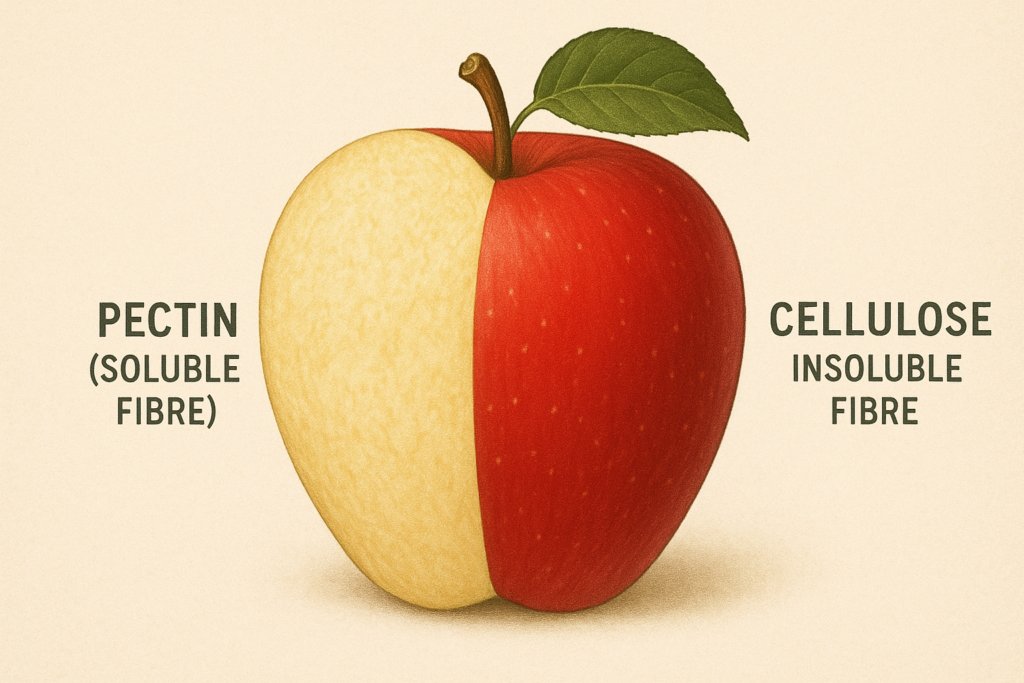
Did you know that apple contains both soluble and insoluble fibres?
Fibre Beyond Digestion
While fibre is best known for supporting digestion and preventing constipation, its benefits extend far beyond the gut. A fibre-rich diet can positively influence several aspects of overall health.
How?
Heart health: Soluble fibre binds to LDL (bad) cholesterol and helps remove it from the body, supporting healthy cholesterol levels and reducing the risk of heart disease
Blood sugar control: By slowing the absorption of glucose, fibre helps prevent a sudden rise in blood sugar, making it particularly valuable for managing diabetes
Weight management: Fibre promotes satiety making you feel fuller for longer. This can naturally reduce food intake and support healthy weight control
Gut microbiota support: Fibre acts as fuel for beneficial bacteria in the gut, which play a key role in maintaining digestive health and overall well-being
Fibre in the Modern Diet
Modern food trends have dramatically changed the way we eat, and not for the best; the rise of fast food, ultra-processed snacks and refined grains has significantly reduced the amount of fibre in our diets.
Many processed foods are stripped of their natural fibre during production, such as wheat being milled to remove the nutrient-rich bran. Sugary treats, soda drinks and convenience meals often replace whole, fibre-rich options, contributing to widespread deficiencies.
Practical Tips for Boosting Your Fibre Intake
Fibre is naturally found in plant-based foods, including fruits, vegetables, legumes, nuts, seeds and whole grains. Enjoying a wide variety of these foods every day is the simplest way to meet your recommended daily intake of around 35 grams.
Here are some easy ways to add more fibre to your meals and snacks:
Choosing whole grain, multi-grain bread rather than bread made of white refined flour
Eating whole fruits instead of drinking fruit juice to benefit from the fibre-rich pulp and skin
Snacking on low-calory vegetables such as carrots, broccoli and celery as they are rich in fibre
Adding oats, flaxseeds or chia seeds to soups, smoothies, or yoghurt for a simple fibre boost
Choosing dried fruits rich in fibre to satisfy that sweet tooth. You can try dates and prunes rather than highly processed sweets with added fats and sugars
Including legumes such as beans, chickpeas and lentils in salads, stews and wraps- they’re both filling and nutritious
Keeping the skins on organic fruits and vegetables like apples, pears and potatoes whenever possible, as the peel holds extra fibre
Sprinkling nuts and seeds over salads, rice, or baked goods for a nutrient-packed crunch
Fibre-Rich Foods
Making small, consistent changes to your eating habits can dramatically boost your fibre intake, without adding stress to your daily routine.
A fibre-rich diet supports better digestion, regular bowel movements and lasting satiety. This can help naturally regulate food intake and make it easier to maintain a healthy weight.
By filling your plate with a variety of colourful, plant-based foods, you’ll not only meet your daily fibre needs, but also nourish your body with a wide range of essential nutrients.
A simple commitment to eating more fibre is a powerful step towards long-term health and well-being.
You can contact Helen at [email protected]